Partner With Us > Building Donor Retention Into the First Conversation
Building Donor Retention Into the First Conversation
Retention that starts at the door
A face-to-face fundraising program that keeps donors by focusing on how they’re brought in, not just what happens after
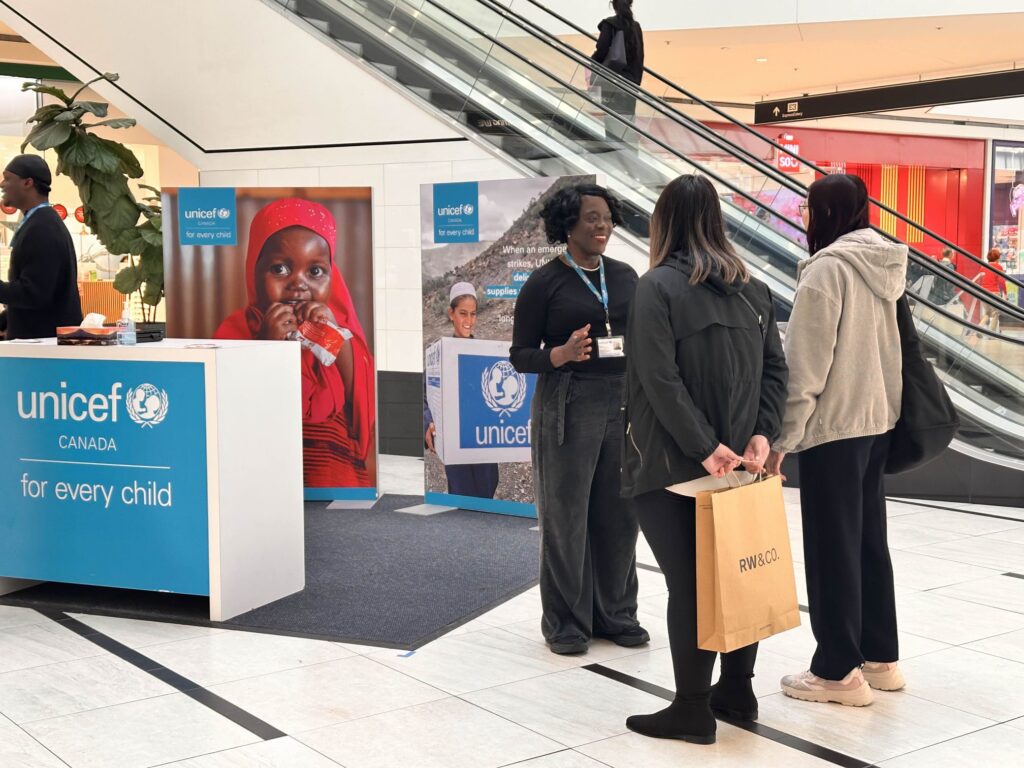
Public Outreach was running a large face-to-face fundraising program across Ontario, Quebec, and the Maritimes for UNICEF Canada, including door-to-door, street, and mall campaigns.
Like most organizations working in this space, retention was a constant concern. Signing someone up is one thing. Keeping them is where the real value is.
A lot of face-to-face programs treat retention as something that gets handled later. Once the donor is in, the assumption is that follow-up and stewardship will take care of the rest.
In practice, most cancellations happen early. If the experience at the door doesn’t hold up once someone has had time to think about it, they don’t stay.
Starting with the conversation
We focus on what happens in that first interaction.
Our canvassers are trained to have real conversations. That means slowing things down enough that the person feels comfortable, and making sure the canvasser can actually speak to the work in a way that feels informed.
The goal isn’t just to secure a sign-up. It’s to make sure the person understands what they’re agreeing to, and feels good about it after the interaction ends.
That carries through to how the donation is confirmed.
Some programs hand donors off to a verification specialist right away, while the canvasser is still there. It’s efficient, but it doesn’t leave much room for someone to think about the decision they’ve just made.
We take a different approach. Our donor services team follows up in the days after the interaction. By that point, the donor has had time to reflect, and the conversation is about confirming the decision, not locking it in.
It’s a small shift, but it filters out decisions that wouldn’t have lasted.
Building retention into the program
After that initial interaction, the focus turns to what the data shows.
Every donation is verified, and retention is reviewed regularly while the campaign is still running. That includes looking at how different groups of donors are holding over time, and adjusting where needed.
We don’t look at retention as a single number. It’s broken down in a few different ways:
- age
- payment method
- donation amount
That level of detail makes it easier to spot where things are holding and where they’re not, without waiting until the campaign is over.
Results
Overall retention stayed high through the first three months:
- 91% retention at month two
- 88% retention at month three
Looking at the breakdown, performance held across different segments of the file.
| Donor Age | Month 1 | Month 2 | Month 3 |
| 18 – 21 | 100% | 64% | 45% |
| 22 – 25 | 100% | 86% | 79% |
| 26 – 35 | 100% | 88% | 83% |
| 36 – 45 | 100% | 92% | 89% |
| 46 – 55 | 100% | 95% | 93% |
| 56+ | 100% | 96% | 94% |
Payment Method
Month 1
Month 2
Month 3
Credit Card
100%
92%
88%
Direct Deposit
100%
90%
86%
Donation Amount
Month 1
Month 2
Month 3
$0 – 10
100%
100%
96%
$10.01 – 15
100%
92%
88%
$15.01 – 19.99
100%
89%
84%
$20 – 24.99
100%
92%
89%
$25 – 29.99
100%
90%
87%
$30+
100%
90%
86%
Across all three views, the pattern is steady. Some groups retain slightly better than others, but there aren’t any sharp drop-offs.
That consistency is what allows the program to scale without creating problems later on.
What we took from it
Retention doesn’t start after the donor signs up.
If the first interaction feels rushed, or the donor isn’t fully clear on what they’ve agreed to, that shows up quickly. Usually within the first few weeks.
When the conversation is handled properly, and the follow-up gives people space to confirm their decision, the drop-off is lower and more predictable.
That’s what this campaign shows. The work at the door, and just after it, carries through.
Thoughtful insights, shared openly.
Practical advice from people who work alongside fundraisers every day.
By clicking Sign up, you confirm you agree to our terms and conditions.
Face-to-Face
Building Donor Retention Into the First Conversation
Retention that starts at the door A face-to-face fundraising program that keeps donors by focusing on how they’re brought in, not just what happens after […]
Telemarketing
How Listening First Nearly Quadrupled Lapsed Donor Returns
Reactivating lapsed donors by changing how the conversation works A telemarketing campaign that significantly outperformed previous results by focusing on real conversations, not scripted calls […]

Telemarketing
Meeting Mid-Level Donors Where They Are: A Flexible Reactivation Strategy
Re-engaging mid-level donors without burning them out A telemarketing campaign that brought lapsed donors back, while protecting long-term donor relationships. A telemarketing campaign that brought […]